
Los Angeles in 2026: A City Rebuilding on Multiple Fronts

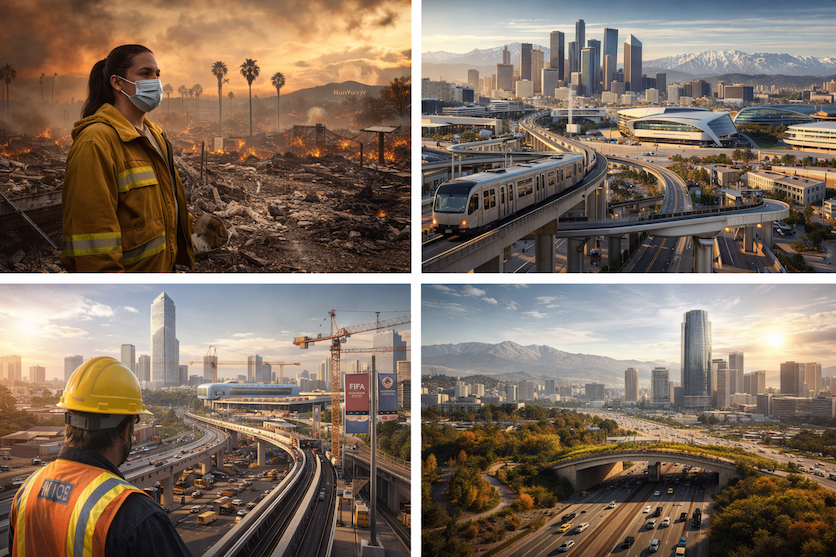
In 2026, Los Angeles is in the middle of one of the most complex transformations in its history.
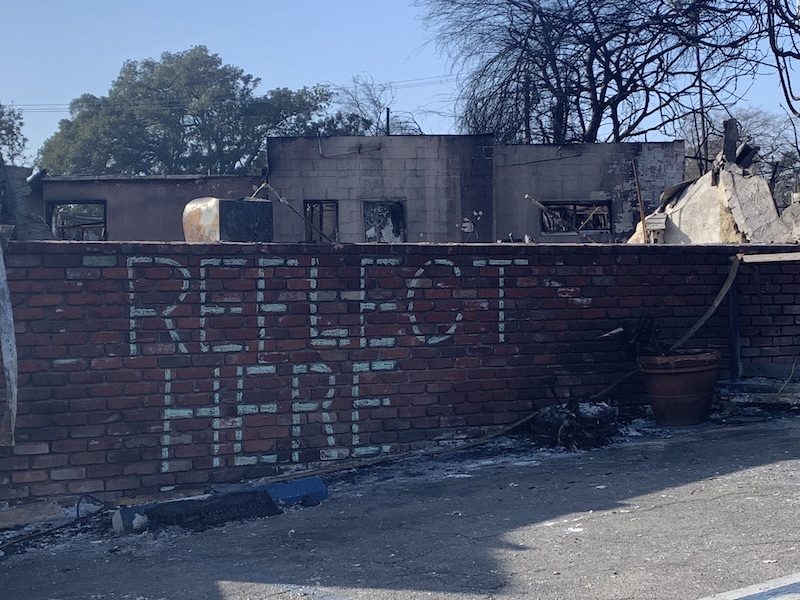
The city is rebuilding in the wake of devastating January 2025 wildfires while simultaneously preparing for a series of global events and long-planned infrastructure projects. Recovery, resilience, and reinvention are unfolding at the same time — sometimes in tension, sometimes in alignment.
What’s happening now isn’t a single rebuilding effort. It’s many, layered on top of one another.
Here are ten of the most notable ways Los Angeles is reshaping itself in 2026.
Los Angeles isn’t just rebuilding structures — it’s rebuilding systems, stories, and trust at the same time.
1. A New Blueprint for Wildfire Recovery
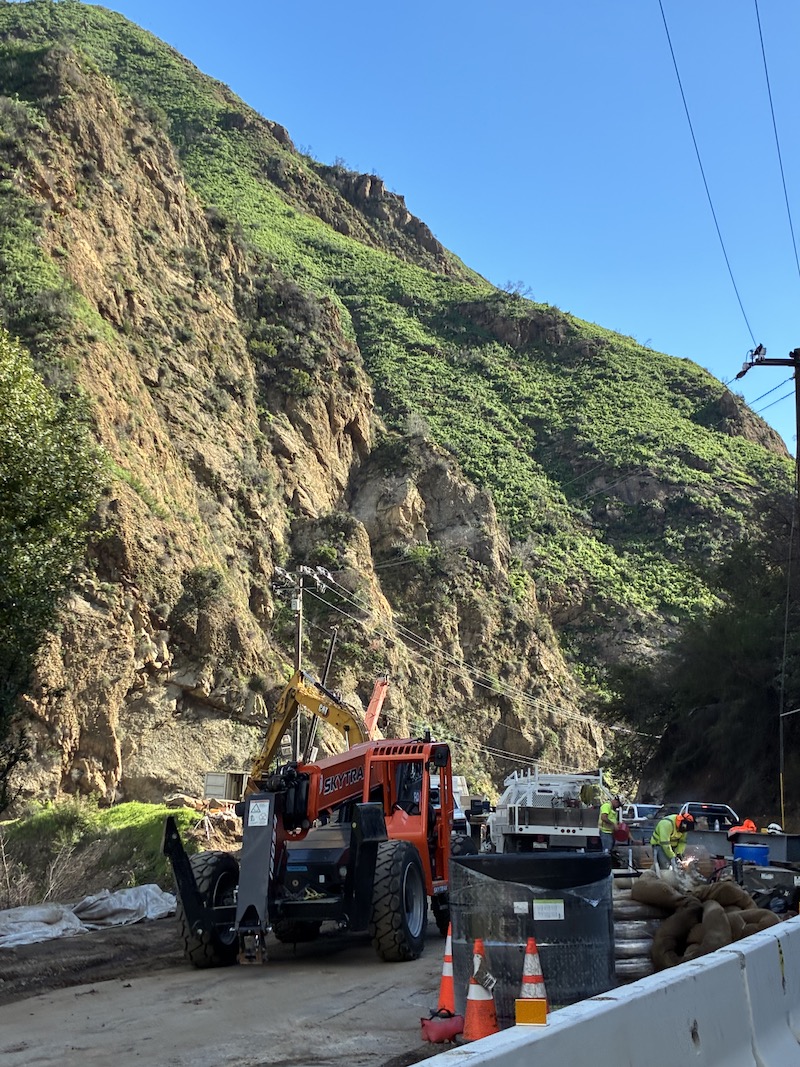
After the 2025 wildfires destroyed more than 18,000 structures across Los Angeles County, the city moved away from business-as-usual rebuilding.
In 2026, officials are implementing what has been described as a “Bold Blueprint” for wildfire recovery — a framework designed to speed reconstruction through streamlined permitting, faster inspections, and updated building standards meant to improve long-term resilience.
The challenge is not just rebuilding what was lost, but doing so in a way that acknowledges a hotter, drier future.
2. The Metro D Line Reaches the Westside
Public transportation expansion marks another major shift.
The first phase of the Metro D Line (Purple Line) Extension is opening in early 2026, adding three new stations between Koreatown and Beverly Hills. For the first time, the Westside is directly connected to the city’s heavy-rail subway network.
For commuters, this changes daily life. For the city, it signals a long-term commitment to moving away from car-dependency in one of its most congested corridors.
3. LAX Finally Connects to the Rail Network
After decades of discussion, construction, and delays, the LAX Automated People Mover is scheduled for completion by mid-2026.
The $5.5 billion, 2.25-mile driverless train will connect airport terminals directly to Metro rail, consolidated rental car facilities, and parking hubs. It represents a long-overdue shift in how visitors — and Angelenos — move through one of the busiest airports in the world.
4. The Lucas Museum Opens Its Doors
Set to open on September 22, 2026, the Lucas Museum of Narrative Art arrives as one of the most significant cultural additions to Los Angeles in decades.
Located in Exposition Park, the $1 billion museum is dedicated to visual storytelling across film, illustration, digital media, and popular culture. Its focus on narrative — rather than traditional fine art categories — reflects how Los Angeles understands itself as a storytelling capital.
5. A Global Rehearsal Through the FIFA World Cup
Los Angeles is one of the host cities for the 2026 FIFA World Cup, and the tournament is serving as more than just a sporting event.
City agencies are using it as a full-scale operational rehearsal — testing transportation systems, crowd management strategies, security coordination, and hospitality infrastructure ahead of the 2028 Summer Olympics.
In many ways, 2026 is a stress test for what’s coming next.
6. LACMA Reimagined
In April 2026, the David Geffen Galleries at LACMA are scheduled to open.
The 900-foot-long, single-story structure replaces four aging buildings with one continuous gallery floor elevated above Wilshire Boulevard. Designed with an advanced seismic resilience system, the project reflects a broader shift toward flexible, earthquake-aware cultural architecture in Los Angeles.
It’s not just a new museum — it’s a statement about permanence in a seismic city.
7. Art Meets Artificial Intelligence at Dataland
A new kind of museum is opening in spring 2026.
Dataland, a 25,000-square-foot space dedicated to the intersection of art and artificial intelligence, will feature immersive installations built from AI-generated environmental and nature datasets.
Its arrival signals Los Angeles’ growing role in shaping how technology, creativity, and ethics intersect — not just in entertainment, but in cultural institutions.
8. Century City Builds Up, On Top of Transit
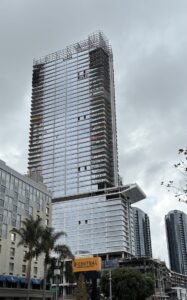
The Century City Center skyscraper at 1950 Avenue of the Stars is slated for completion in 2026.
The 37-story tower will serve as the new headquarters for Creative Artists Agency (CAA) and sits directly above a new Metro station — a rare example of high-density commercial development integrated with public transit.
It reflects a larger push toward transit-oriented development in traditionally car-centric parts of the city.
9. Wildlife Crosses the Freeway
Not all rebuilding is about people.
The Wallis Annenberg Wildlife Crossing, spanning the US-101 Freeway, is expected to be completed in 2026. The structure will allow mountain lions and other wildlife to safely move between the Santa Monica and Santa Susana Mountains.
It’s one of the most ambitious urban wildlife projects in the world — and a reminder that rebuilding Los Angeles also means repairing fractured ecosystems.
10. Housing and Land-Use Reform Takes Effect
In mid-2026, California Senate Bill 79 goes into effect, targeting increased residential density near transit corridors and key urban areas.
The legislation aims to address housing shortages while navigating environmental regulations, wildfire risk, and historic preservation concerns. How successfully it balances those priorities will shape Los Angeles for decades.
A City Rebuilding in Layers
What defines Los Angeles in 2026 is not a single project or event, but the convergence of many.
Recovery from wildfire devastation. Massive infrastructure investments. Cultural expansion. Environmental repair. Housing reform. Global attention.
Rebuilding LA has never been a singular act — it’s an ongoing process, shaped by urgency, ambition, and contradiction. In 2026, that process is more visible than ever.